The difference between a vision screening and comprehensive eye exam
Posted on September 3, 2026 in Healthy You
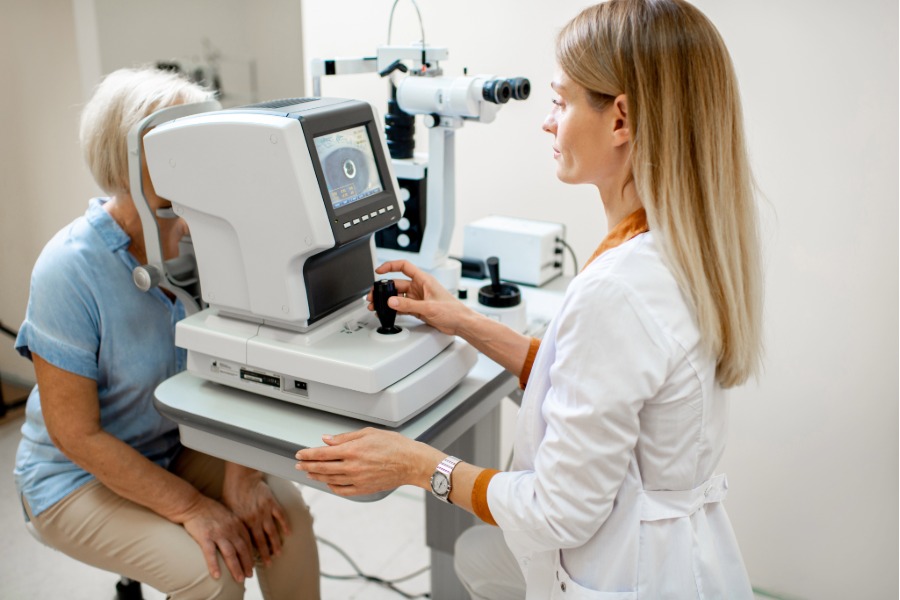
If you’ve ever passed a school vision test or a quick screening to get your driver’s license, you might assume your eyes are healthy. But a vision screening and a comprehensive eye exam are not the same thing. Knowing the difference can help protect both your eyesight and your overall health.1
A vision screening is a basic check to identify possible eyesight problems. A comprehensive eye exam is a full medical evaluation of your vision and eye health performed by an optometrist (a trained professional with a Doctor of Optometry degree) or ophthalmologist (a MD/DO-trained physician).1,2
Quick comparison: Vision screening vs. eye exam1,2,3
| Vision screening |
Comprehensive eye exam |
| Quick test that checks for possible sight issues |
Complete evaluation of eye health and vision |
| Often performed at schools, pediatrician offices, health fairs or Department of Motor Vehicles (DMV) sites |
Performed by highly a trained eye specialist (optometrist or ophthalmologist) |
| Usually checks visual acuity (how clearly you see letters or symbols) |
Includes multiple tests for vision, eye coordination, eye pressure and eye disease |
| Can identify people who may need follow-up care |
Can diagnose eye diseases and prescribe treatment |
| Does not replace an eye exam |
Considered the gold standard for protecting eye health |
What happens during a vision screening?
A vision screening typically involves reading letters from a chart to measure how clearly you can see. Some screenings may also check depth perception (your ability to know how far away something is) or color vision.3
Screenings are important, especially for children, because they can identify people who may need additional vision support. However, screenings have limitations and can miss important eye and vision disorders. Just because you pass a vision screening does not mean your eyes are healthy.
This is where comprehensive eye exams come in.
What happens during a comprehensive eye exam
A comprehensive eye exam goes beyond checking whether you need glasses or contacts. During the exam, your eye doctor evaluates the overall health of your eyes and looks for signs of vision problems and eye disease.1,3
Your appointment may include:
- A review of your medical and family history
- Vision testing and prescription checks
- Tests for eye coordination and focusing
- Peripheral (side) vision testing
- Evaluation of how your pupils respond to light
- Examination of the retina and optic nerve
- Screening for conditions such as glaucoma, cataracts, macular degeneration and diabetic eye disease1,3
Eye exams can also reveal signs of broader health conditions like diabetes, high blood pressure, autoimmune diseases and even certain cancers. Keeping regular eye exams is a great way to stay on top of your health and potentially catch a problem early on, before it’s too serious.1,4
Why regular eye exams matter
Many eye diseases develop gradually and may not cause symptoms at first. By the time vision changes become noticeable, you may already have eye damage. That’s why early detection is so important.1
People of all ages can all benefit from regular comprehensive eye exams. Your eye specialist, whether it be an ophthalmologist or an optometrist, can recommend how often you should schedule exams based on factors like your age, medical history, family history and existing vision conditions.3
Take the next step for your eye health
A vision screening can be a helpful starting point, but it should not replace a comprehensive eye exam.1 Protect your sight and your overall health by scheduling regular exams with an in-network DeltaVision provider.
Use the DeltaVision Find a Provider tool to locate a vision specialist near you and ask how often you should receive comprehensive eye exams based on your personal health history.
References:
- American Optometric Association. The Full Picture of Eye Health. https://www.aoa.org/healthy-eyes/caring-for-your-eyes/full-picture-of-eye-health
- Centers for Disease Control and Prevention. (2024, May 15). Youth Vision Problems. https://www.cdc.gov/vision-health/prevention/youth-vision-problems.html
- American Optometric Association. Eye Exams. https://www.aoa.org/healthy-eyes/caring-for-your-eyes/eye-exams
- Centers for Disease Control and Prevention. (2024, May 15). Taking Care of Your Eyes. https://www.cdc.gov/vision-health/prevention/taking-care-of-your-eyes.html
back to Top